

The Body, Redrawn
Revisiting my comic “Vessel” and exploring how tattoos and comics can translate the self.

Howdy, friend.
A little over three years ago, I published my comic “Vessel” at The Offing, a piece about where my tattoos come from, what they mean, and how they’ve helped me tell stories as a form of corporeal autonomy. Lately—probably because I’m itching for new ink—I’ve been thinking about that comic again, and about how tattoos and comics overlap as languages of self-perception.
There’s a deep connection between the marks we carry on our bodies and the marks we make on paper. Drawing myself in comics always feels like an act of translation—not just trying to capture what I look like, but how I feel and what I carry.
(If you missed my previous two installments, I dissected how we draw ourselves in comics, the very foundation of autobio work, here and here.)
In memoir comics, every line is a choice. The curve of a shoulder, the shadow under an eye, the stubble on a chin—all of it shapes how the reader experiences you. When I began working on my current graphic memoir, though, I intuitively drew myself without tattoos.
Why?
In part because it was easier. As much as I love my tattoos, recreating their intricacies panel-by-panel didn’t feel worth the time. But there was something else: the Rob on the page had become a stylized version of me. I’ve always loved how, in Japanese manga, protagonists are often drawn with simplicity—minimal lines compared to richly detailed backgrounds.
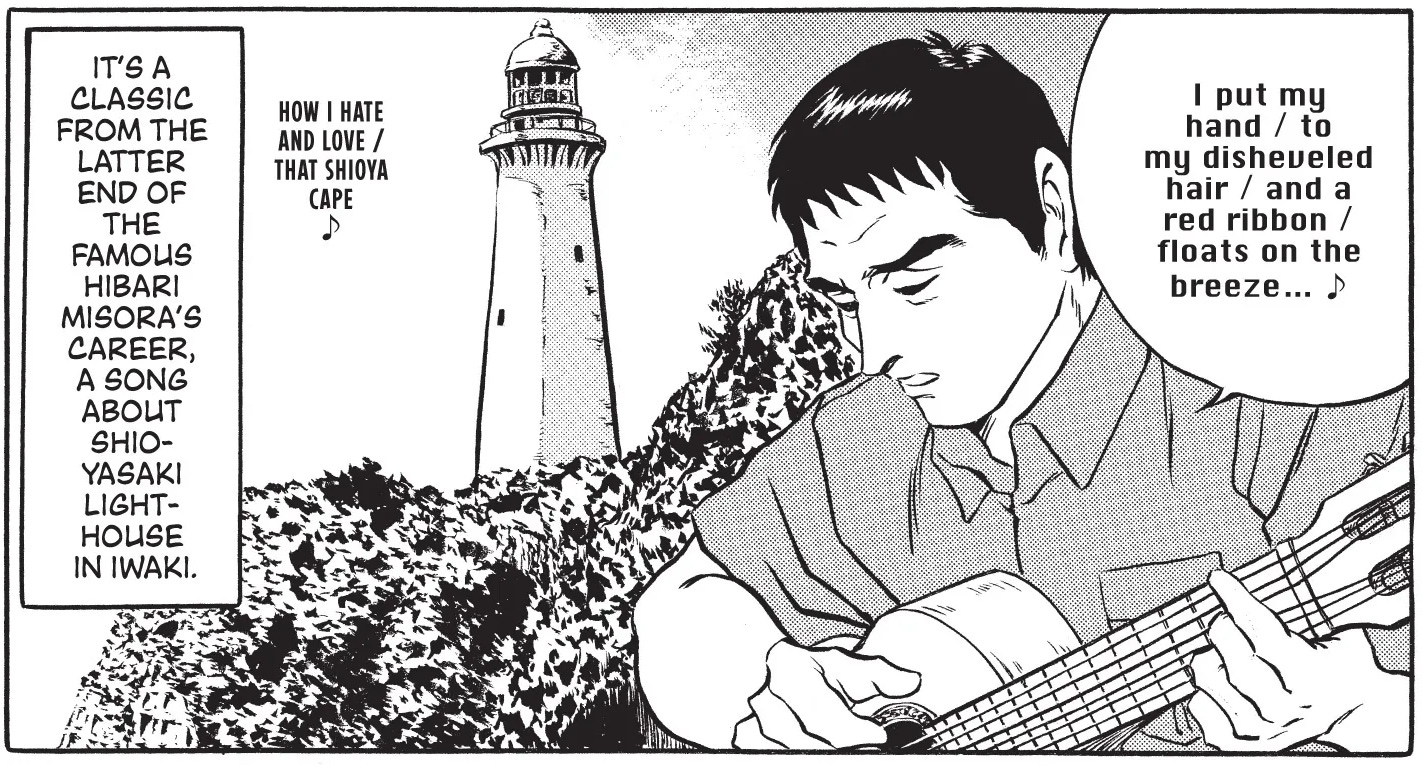
Rendering myself simply became an act of quiet defiance against my body dysmorphia. By choosing not to replicate every crease or blemish, I reclaimed my image. That’s one of the most powerful aspects of autobiographical comics: they let you construct the body as you experience it, not as the world insists it should be.
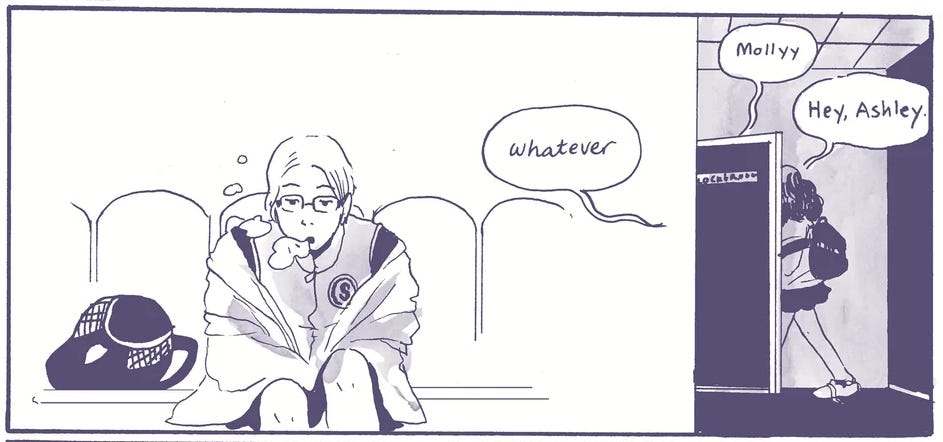
Tillie Walden’s Spinning maps adolescence, queerness, and the unease of growing into a body that doesn’t feel like your own, using color and negative space to evoke isolation and longing.
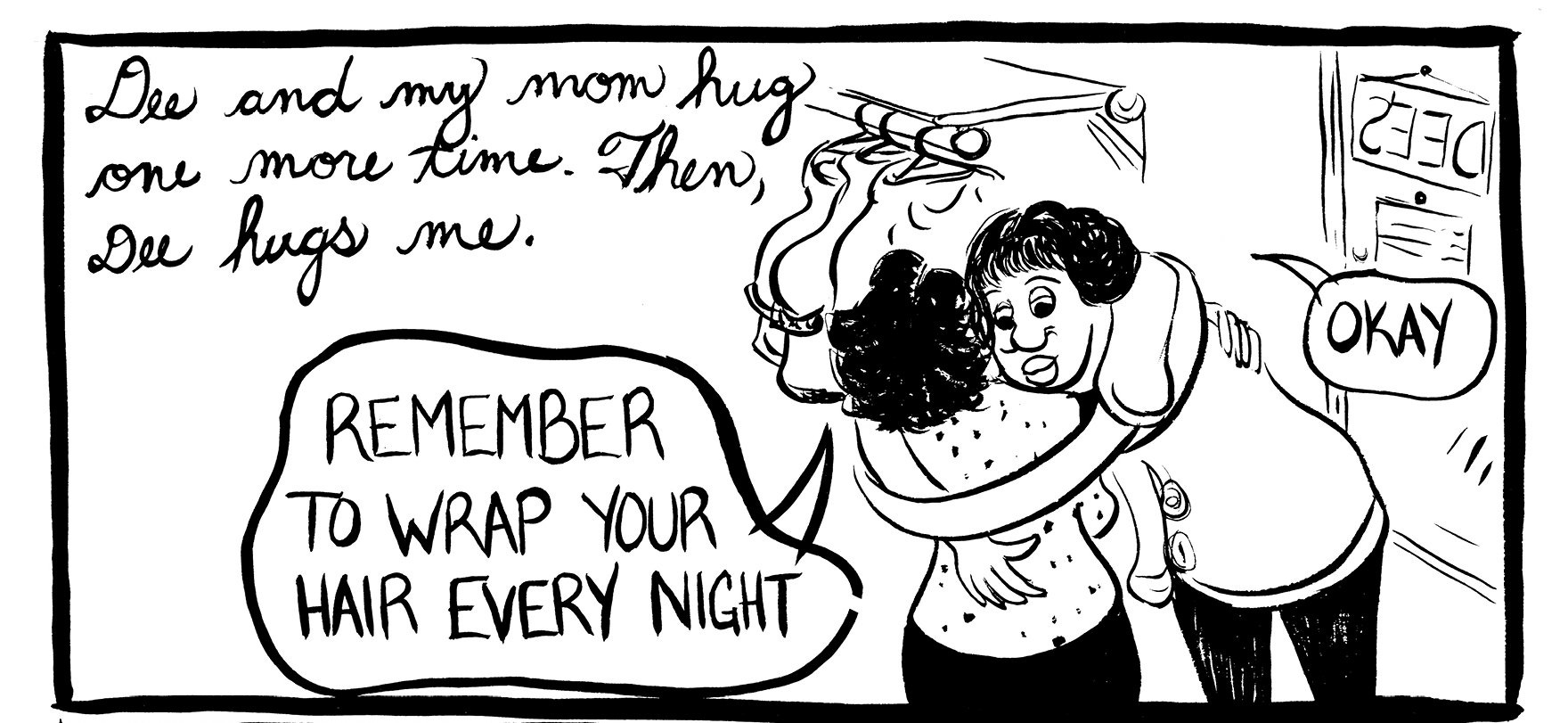
Ebony Flowers’ Hot Comb explores how racialized and gendered experiences shape identity, her loose, lived-in linework mirroring the intimacy of hair and skincare rituals.
Katie Green’s Lighter Than My Shadow visualizes eating disorders and body dysmorphia through chaotic graphite textures—an embodiment of self-loathing that feels both visceral and tender.
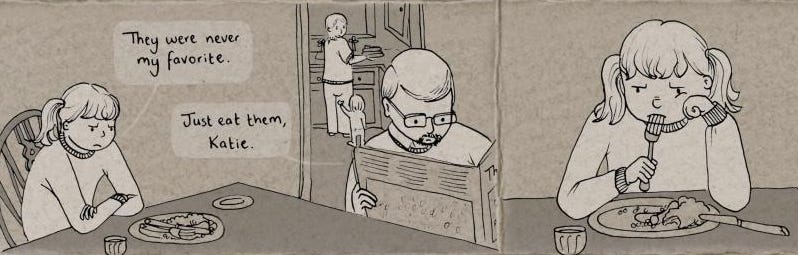
Working on “Vessel” reminded me that self-perception isn’t fixed—it’s iterative. Each line, each panel, each page offers another chance to re-examine who I am. Memoir comics give you that intimacy with yourself, the ability to hold your story in your own hands.
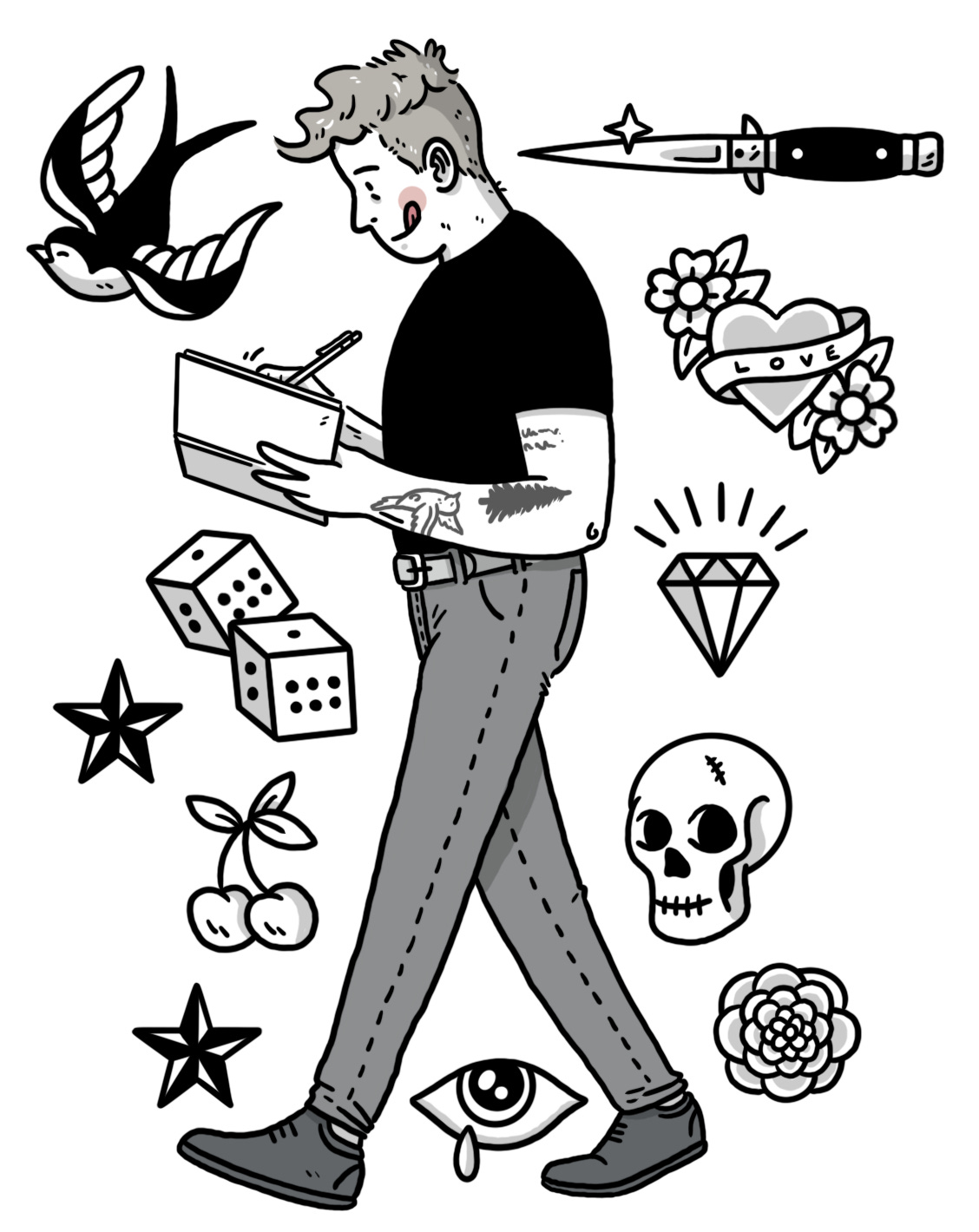
Like my tattoos, drawing my story became a way to move past distortion, to inhabit my body with curiosity instead of criticism. My tattoos are acts of reclamation, reminders that this body is mine. I love my tattoos, but as I work on my graphic memoir Hard Body, about my lifelong body dysmorphia, I may not include them at all—as a quiet reminder to love what’s underneath them, too.
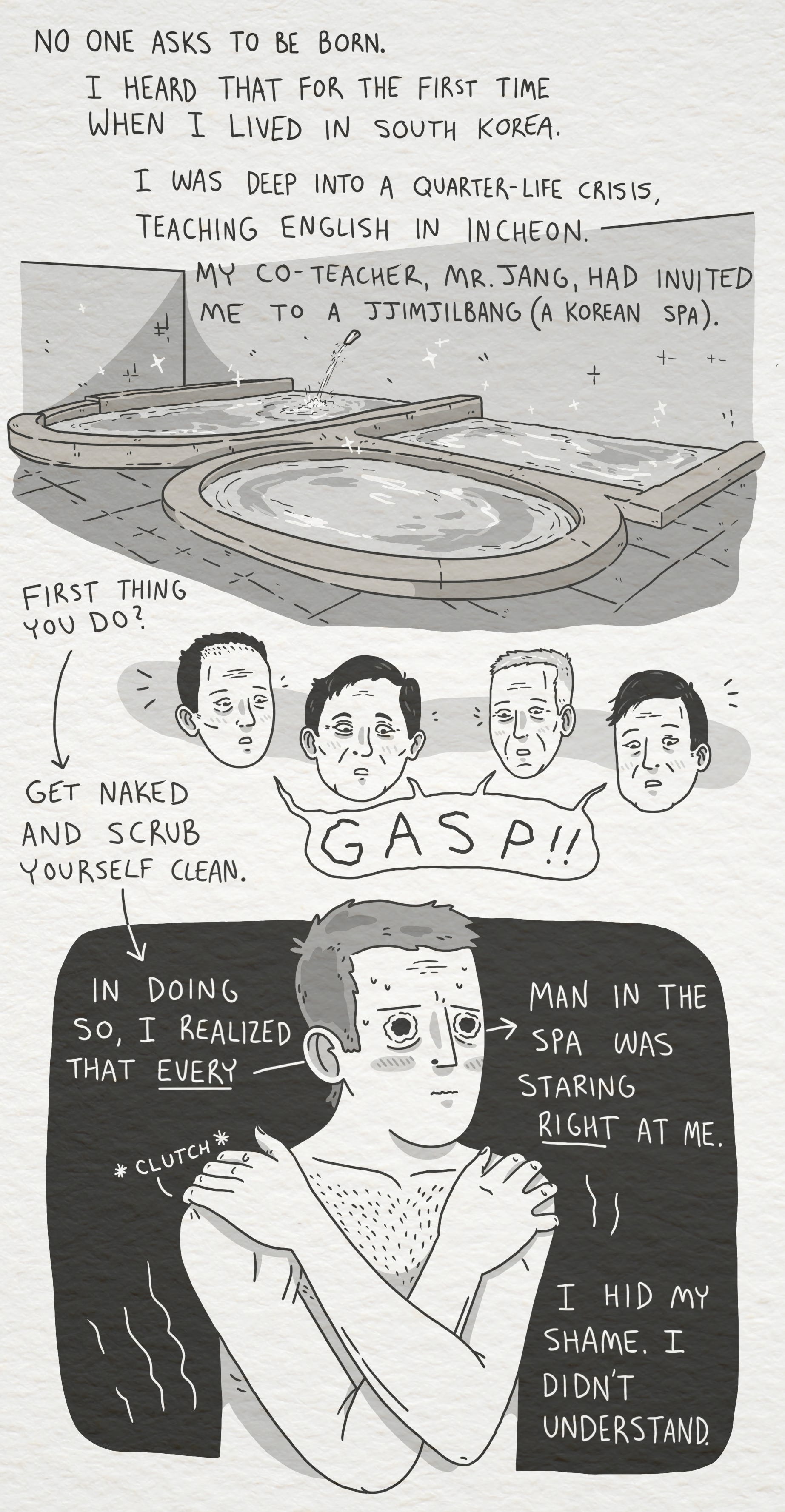
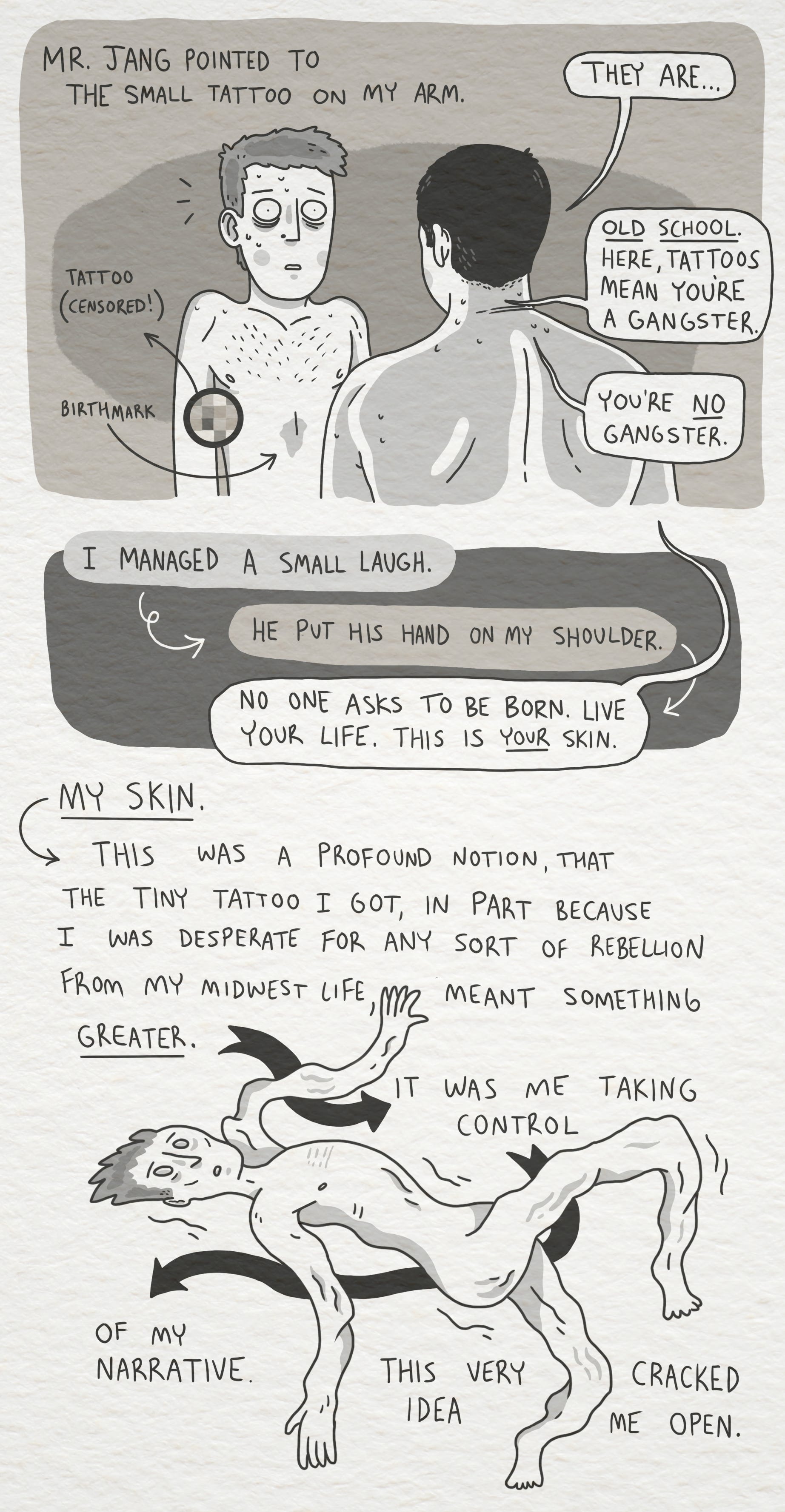
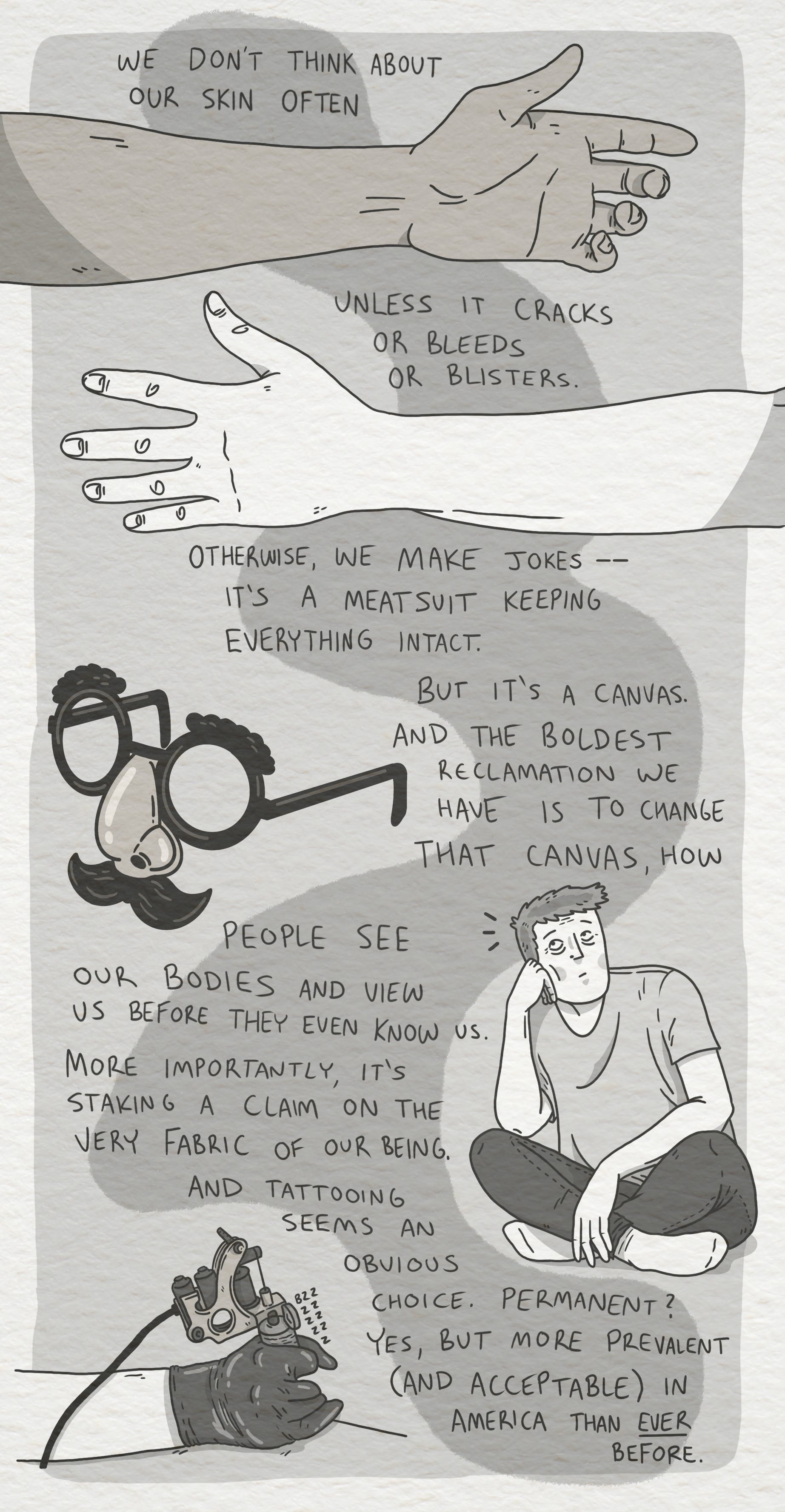
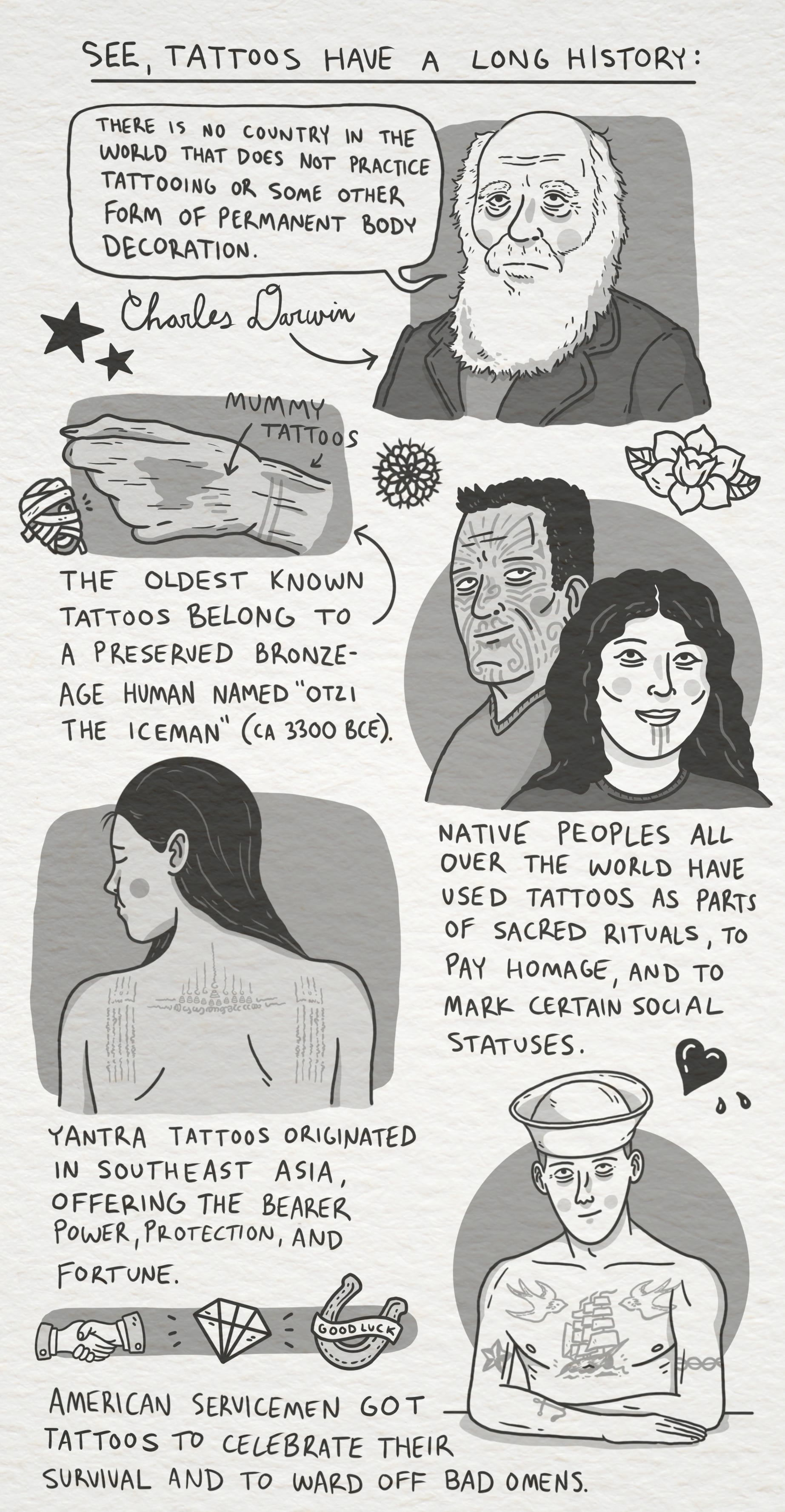
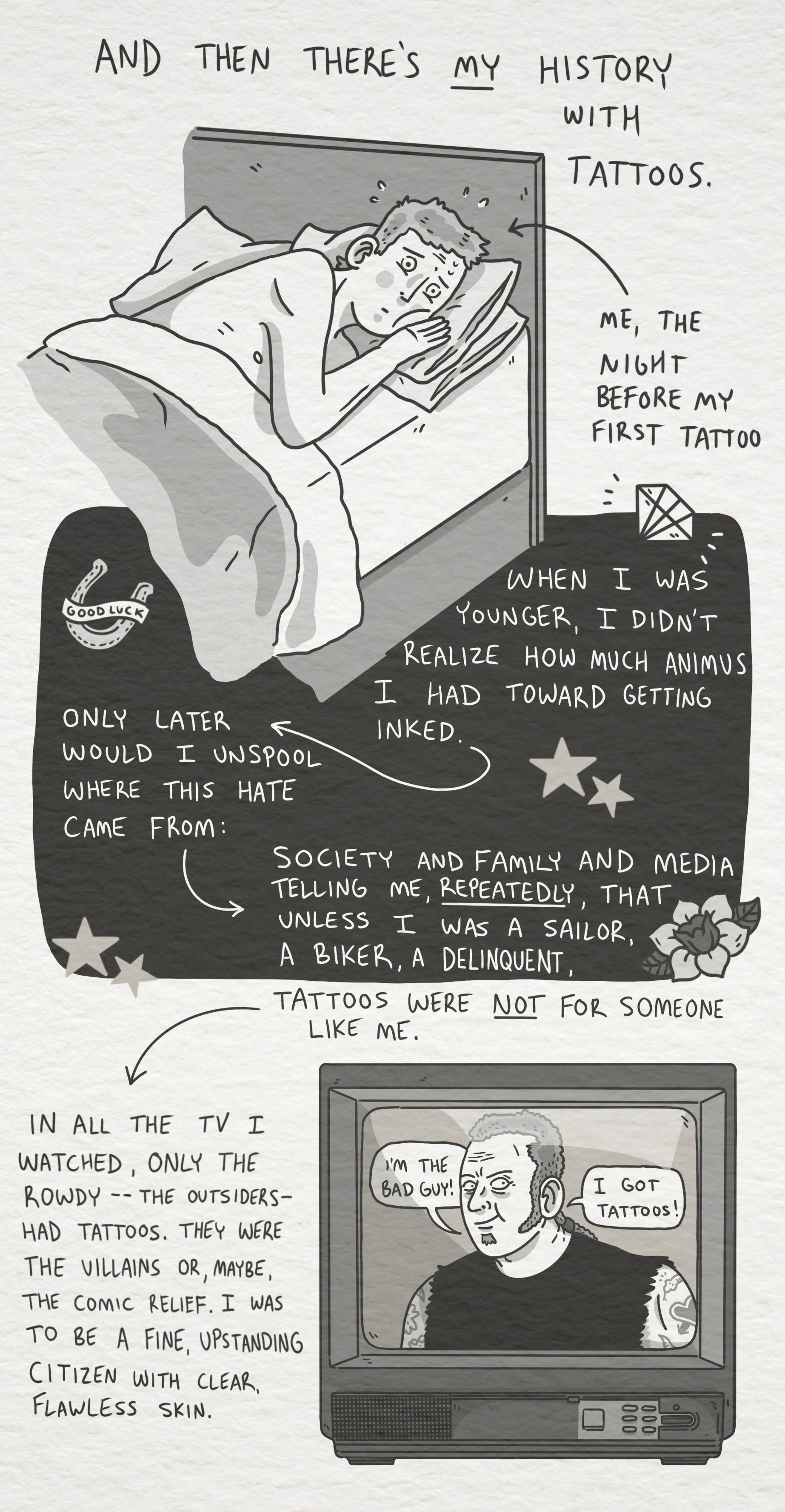
Below are the first few pages from “Vessel.” If you’re interested, you can read the full comic at The Offing. ♡
– RJR
I always appreciate your thoughtful approach to making comics.
I’m currently reading the illustrated man by Ray Bradbury. This article made me think of the book cover